
Couples & Relationship Counselling Fairfield
Specialist, attachment-informed therapy for couples and individuals navigating the complexities of intimate relationships. Based in Thornbury, a short drive from Fairfield, with secure telehealth available across Melbourne and Australia-wide.
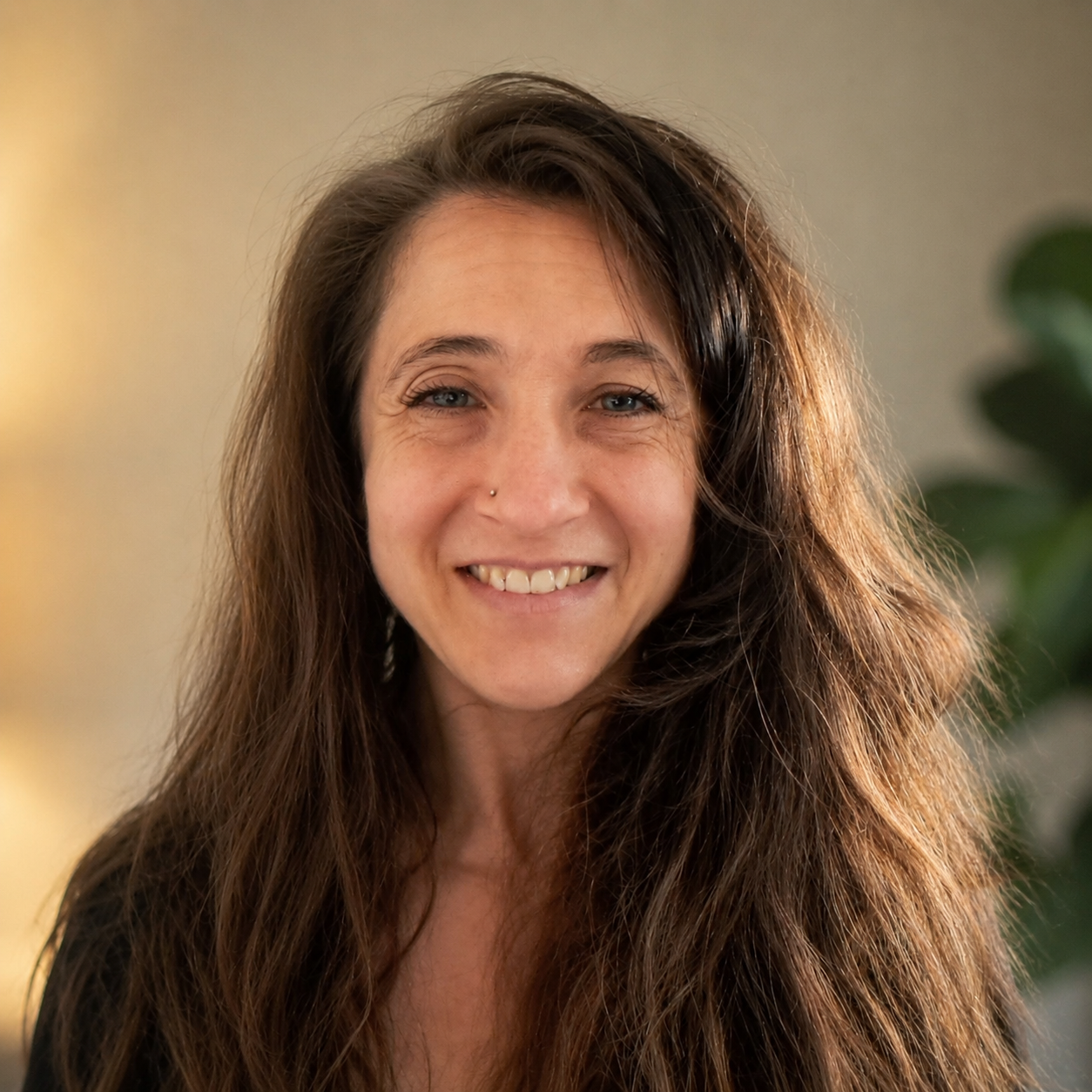
Stephanie Schiftan
Couples & Relationship Therapist
MCouns (Couples) · GradDipEd · BFA (Hons) · Specialist Course in Integrative Couples Therapy (RAV) · ACA Member
I came to this work through a winding path, first in creative practice and later in education, and both continue to shape how I work today. My background in Fine Arts taught me to pay close attention to what sits beneath the surface. My years as a teacher deepened my curiosity about how people make sense of themselves, their relationships and the experiences that shape them.
I work with couples and individuals at every stage of relationship. Whether you're feeling disconnected, caught in painful patterns, navigating a major life transition, or wanting to strengthen an already solid relationship, therapy offers a space to slow down, understand what's happening between you, and begin creating something different. LGBTQIA+ clients and diverse relationship structures are warmly welcomed.
Learn more about Stephanie's background and therapeutic approach →
A Dedicated Couples and Relationship Practice
People reach out at very different moments. For some, a specific rupture has made things suddenly urgent. For others it is subtler: a slow drift, a sense of speaking past one another, or the feeling that closeness has quietly thinned over the years.
Relationship Practice is the counselling practice of Stephanie Schiftan, a masters-qualified couples therapist based in Thornbury, a short drive from Fairfield. Her interest is in the emotional life of relationships: the patterns we absorb early and carry into adulthood, often without noticing, and the ways they shape how we reach for, or retreat from, the people closest to us. She pays particular attention to family history, the influence of earlier generations, and the wider contexts that quietly shape the roles we take up with a partner.
Rather than asking who is right or wrong, the work begins with curiosity about what is happening between two people. This is a dedicated couples and relationship practice, not a general clinic with counselling as one service among many. Stephanie holds a Master of Counselling (Couples Stream) and trained as a couples therapist at Relationships Australia Victoria, completing the Specialist Course in Integrative Couples Therapy and her supervised clinical hours there. She is a member of the Australian Counselling Association.
How We Can Work Together
Couples & Relationship Counselling
A space for couples to slow down, understand recurring patterns, and work with the emotional processes shaping distance, conflict or disconnection.
Individual Counselling
For individuals seeking to better understand themselves in relationship, including attachment patterns, relational difficulties and intimacy concerns.
Prepare/Enrich
A research-based program for couples preparing for or deepening commitment, helping you understand each other more fully and build strong foundations together.
Getting Here from Fairfield
The practice is located on Mansfield Street in Thornbury, around a 10-minute drive from Fairfield via Station Street and High Street. Many clients find it a straightforward trip, whether travelling during the day or after work.
If you're driving, there is generally unrestricted street parking available nearby. The practice is also accessible by public transport, with tram services along High Street and Thornbury Station within walking distance.
If travelling isn't practical, online appointments are also available via secure telehealth, allowing you to access counselling from home or another private location.
Frequently Asked Questions
We keep having the same argument. Can counselling actually help?
Yes, and it is one of the most common reasons couples come in. When the same fight keeps returning, the content is rarely the real issue; underneath it sits a cycle each person is caught in, often driven by feeling unheard, unimportant or shut out. Counselling works with that underlying pattern rather than the surface disagreement, which is what allows the loop to actually loosen rather than just pause.
How do attachment styles show up in a relationship?
The ways we learned to seek closeness and safety early in life tend to shape how we reach for a partner as adults, often without our noticing. One person might respond to distress by pursuing and pressing for connection, while the other pulls back to protect themselves, and each response can unintentionally trigger the other. Much of my work is about helping couples recognise these attachment patterns as they play out between them, so that what once felt like a character flaw or a deadlock starts to make sense and can shift.
Isn't couples counselling just learning to communicate better?
Communication tools have their place, but on their own they rarely hold, because most couples already know how they should talk and still cannot in the heat of the moment. What gets in the way is usually emotional, the fear, hurt or self-protection underneath the words. My work goes to that layer, so that better communication becomes a natural result of feeling safer with each other rather than a technique you have to remember mid-argument.
What makes Emotionally Focused Therapy different?
Emotionally Focused Therapy, developed by Dr Sue Johnson, is grounded in attachment science, the study of how we bond and feel secure with those closest to us. Rather than handing couples scripts or rules, it works directly with the emotions and cycles that keep partners stuck, helping you see the pattern you fall into and build a steadier, more secure bond beneath it. It is among the most thoroughly researched approaches to couples work, and it sits at the centre of how I practise.
Can counselling help after a breach of trust or an affair?
Yes. Rebuilding after betrayal is difficult but genuinely possible, and it is a large part of what I work with. The process makes room for the pain and the rupture without rushing past it, while helping both of you understand how things reached this point and decide, with more clarity, how you want to move forward. Some couples rebuild something stronger than before; others reach an honest, considered decision about their future, and both are legitimate outcomes.
Is it too early to come in if things are only a little off?
It is rarely too early. Many couples reach out while things still feel manageable, when there is a quiet distance or a sense of drifting rather than open conflict. Coming in before patterns harden usually makes the work gentler and shorter, and it is often easier to rebuild closeness that has thinned than to recover it once it has broken down.
My partner is hesitant. Is it still worth reaching out?
Yes, and this is very common. It is usual for one person to feel more ready than the other, and we can begin with whoever is willing. The hesitation itself is often worth understanding, because it tends to reflect something about what is happening between you, and a free 15-minute consultation can help a reluctant partner get a feel for the space before deciding.
Can I come on my own?
Yes. Alongside couples, I work with individuals who want to understand their own patterns in relationships, whether or not they are currently partnered. Sometimes people begin on their own and bring a partner in later; sometimes the individual work is the work. Either way, looking at how you relate can shift things even when you come by yourself.
What actually happens in a first session?
The first session is mostly about building a shared picture of what has brought you in and what each of you would like to be different. There is no expectation that you have it worked out, and part of it is simply noticing how it feels to work together. If you would like a sense of fit first, a free 15-minute consultation is an easy way to start.
How long will we need to come for?
It depends on what you are working through and what you are hoping for. Some couples come for a focused piece of work over a handful of sessions, while others stay longer to shift patterns that have been in place for years. Emotionally Focused work generally unfolds over a course of sessions rather than a single visit, and we review together how things are tracking as we go.
What are your fees?
A 60-minute session is $220 and a 90-minute session is $300. The Prepare/Enrich program is offered as a package. If you are unsure which option suits you, a free 15-minute call is an easy place to begin.
Can we claim through Medicare or private health?
Couples and relationship counselling is generally not covered by Medicare, whose mental health rebates apply to individual treatment of a diagnosed condition, and counsellors are not Medicare providers. Some private health funds offer a rebate on counselling depending on your fund and level of extras cover, so it is worth checking directly with your insurer. I am an ACA-registered counsellor, which some funds ask about when assessing eligibility.
Will what we talk about stay private?
Yes. What you bring is held in confidence, within the limits set by law and professional ethics, which I go through with you at the outset. A private, steady space is part of what makes this kind of work possible.
Do you see clients from Fairfield?
Yes. The practice is in Thornbury, a short drive from Fairfield through Northcote, so in-person sessions are easily within reach for Fairfield couples and individuals. For those who would rather not travel, secure telehealth means we can work together from home, and many clients move between in-person and online depending on the week.
Begin with a conversation
If something in your relationship feels stuck, distant or uncertain, you do not need to have it all worked out before reaching out. A free 15-minute consultation is a low-pressure way to ask questions and see whether this feels like the right fit.